martedì 14 maggio 2013

Biodiversity and environmental sustainability in the wine. Philosophy come true!

It all started with anthroposophy and Rudolph Steiner.
Anthroposophy is a philosophical vision of life that leads the  spiritual in man towards the spiritual in the universe.  It is not easy to imagine how this philosophy would relate to the world of wine.  But indeed, it does ! 
In 1924,  philosopher Rudolf Steiner developed the theory of the “two formative forces” that, taken together, cooperate with each other to balance the effects of the soil, water, heat and light of the sun, animal life and plant life.
The “terrestrial strength” and the “cosmic force”.
In the first, you can find the phenomena of growth and production of substances, and in the second, the phenomena of fertilization and maturation.
The farmers that closely followed Steiner’s philosophy began to breed plants with specific natural ingredients and fertilizers determined by him, completely excluding the use of chemical fertilizers. They were able to achieve remarkable and amazing results.

     Even today, the majority of producers do not completely exclude the use of chemicals for growing grapes, especially  in some  areas of the planet where the balance of eco-system were completely devastated from the unconscionable greed of man. For the past 50 years, too much damage has been inflicted on the land and the environment in general that it is too much to ask of nature for a natural spontaneous resumption to a harmonious balance of life.  The plant and animal kingdoms have altered too greatly.
     Today, it is no longer possible to accept  these invasive and destructive assaults  on the land  without having to come to terms with the negative impact on the survival of  the authenticity and quality of  our agricultural products. The good news, however, is that in many regions of our globe,  many farmers have had a profound rethinking about the techniques of vine cultivation. With much success, they are practicing organic farming that is biodynamic and environmentally friendly based on the principles set forth by Steiner or following methods that have always been part of the tradition and culture of the region, but with a modern twist.
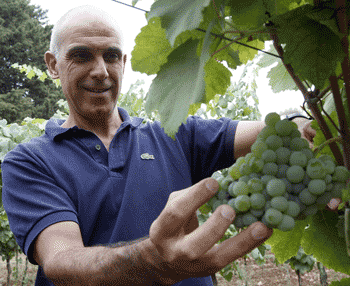
 Some days ago, Marco Carpineti(http://www.marcocarpineti.com) told me about his idea to go back to using the horse and plow for cultivation of part of his vineyard.
No more use of tractors or other machinery.

 “The vineyard should not breathe combustion residues. I think that wine has to be the expression only of manual labor and the love of expression of the winemaker.”  His wines, the result of organic farming and nearly thirty years of experience, have achieved levels of excellence; both for whites and for reds, not to mention the newly born sparkling Bellone which is made with the traditional method of secondary fermentation in the bottle.
He practices the exclusive cultivation of native vines over an area of fifty-two hectares: Bellone, Montepulciano, Arciprete white, Greco Moro, Malvasia, Cesanese, and Nero Buono.
The happiness of the achievements can be perceived by the smile of Marco, never tamed of the desire to discover new ways to convince everyone he meets that the only way to recover the quality of wine is the traditional and biological cultivation of the vine and respect of the territory.

     Last April, during the Vinitaly 2013, I met Filippo Ferrari, an agronomist and enologist, who along with Cristian Giorni, gave rise to the “current” ViniEtici (www.vinietici.it). 
He lays out three basic principles for the creation of the so-called ethical products: keep the land fertile,  keep the plants in good health, improve the quality of the products. He says that “nature provides directly the natural elements in order to grow the plant, without the use of products derived from chemical synthesis.” He talks of herbal teas, mineral compounds, and manure, to restore soil fertility.

     Organic is also the absence sulfites. Intergrapes is a brand that some affiliate wineries use to witness and ensure the overall integrity of the wine produced in the total absence of added sulfites. The company has developed a compound extracted from the seeds contained in the grape that acts as an anti-oxidant and anti-bacterial preservative for wine. It is added in controlled dose after malolactic fermentation and bottling process. It is a natural compound that replaces the sulfur and should not alter the secondary aromas, typical of the first stage of fermentation and aging of wine.

The cellar Nativ (http://www.winenativ.com) of Paternopoli (AV) is one of fourteen cellars of Intergrapes partners.
The ten wines all come from indigenous grapes (Aglianico, Fiano di Avellino, Falanghina, Greco di Tufo). It is a young company led by Mario Ercolino, winemaker, and his wife Ronerta Pirone.
 Their wines express a strong and unequivocal link with the territory and with the tradition and history that over time has crossed the hills of Irpinia; the founding concept of the philosophy of viticulture undertaken by Nativ.
Characterized by volcanic soil, strongly mineral, limestone and tuff.


The position of the vineyards, located at an altitude between 450 to 550 meters (above sea level), near the Picentini mountains, gives the wine extreme temperature changes that have a positive impact on the fragrance and  the intensity of taste and smell,. This  adds to the strength of the wine character, important presence of tannins and richness of extract. White wines  are strongly mineral with fruity and floral notes, typical of the strain of origin. Red wines are loaded with polyphenols, very concentrated and creamy, rich in glycerin and with intense scents of ripe red fruit and minerals. Those passed in the wood enjoy the presence of spices, ether perfumes and greater softness of the sugar alcohols.
It is too early to express judgment on the longevity of these products , even if the conditions portend an interesting result. The tone of the scents and tactile sensations in the medium term widely holds  up  in comparison  to  the wines  treated with sulfur dioxides instead.
I intend to follow the evolution of the Nativ wines over the next few years, and I invite you to do the same in order to test this new antioxidant and natural technique  that keeps the product intact and pleasantly biological.

Rome, may 13, 2013


dott. Bartolomeo Roberto Lepori

Association of Journalists - Rome 
Card no. 137270 
Professional Sommelier A.I.S. 
Card no. 112666 
E-mail:    roberto.lepori @ mac.com              
roberto.lepori @ goldtv.it 
PEC:       bartolomeo_roberto.lepori@cert.odg.roma.it

Biodiversità e sostenibilità ambientale nel vino. Una filosofia che diventa realtà.

Tutto parte dall’Antroposofia e dalla visione filosofica di vita che ne deriva elaborata da Rudolf Steiner,  per cui lo spirituale che è nell’uomo è condotto verso lo spirituale che è nell’universo.
Detto così, non è facile immaginare come questo pensiero filosofico possa confrontarsi con il mondo del vino.
E invece no!
Il filosofo Rudolf Steiner, già nel 1924, elaborò la teoria delle “due forze formatrici” che, congiuntamente, cooperano tra loro all’equilibrio fra il suolo, l’acqua, il calore e la luce del sole, la vita animale e la vita delle piante.
La forza terrestre e la forza cosmica.
La prima, riscontrabile nei fenomeni di crescita e di produzione delle sostanze; la seconda, nei fenomeni di fecondazione e di maturazione.
Gli agricoltori a lui vicini iniziarono così ad allevare le piante con specifici ingredienti naturali da lui indicati in aggiunta a concimi naturali, escludendo totalmente l’uso dei concimi chimici, ottenendo notevoli e stupefacenti risultati.
La gran parte dei produttori, ancora oggi, non se la sente di escludere totalmente l’utilizzo della sintesi chimica per la coltivazione della vite, in particolare in alcune specifiche zone del pianeta, dove l’equilibrio eco-ambientale è stato totalmente stravolto dall’incoscienza dell’uomo e della sua avidità.
Troppi danni sono stati provocati al terreno e all’ambiente in generale in questi ultimi cinquant’anni, per pretendere dalla natura una spontanea e naturale ripresa della vita. Il regno animale e vegetale sono mutati fortemente. Oggi non è più possibile accettare interventi così invasivi e distruttivi senza dover poi fare i conti con la sopravvivenza della genuinità e della qualità dei prodotti agricoli.
La grande novità, però, è che in diversi territori del nostro globo molti agricoltori hanno avuto un profondo ripensamento sulle tecniche di allevamento della vite, e, con successo, stanno praticando agricoltura biologica, biodinamica ed ecocompatibile, ispirandosi al pensiero del filosofo Steiner, oppure ripercorrendo le tradizioni e la cultura dei luoghi, rivisitandole in chiave moderna.

Giorni fa, Marco Carpineti http://www.marcocarpineti.com mi ha parlato della sua idea di tornare a utilizzare il cavallo e  l’aratro per la coltivazione di una parte della sua vigna. Niente più impiego di trattori e di macchinari.
“La vigna non deve respirare i residui della combustione. Il vino deve tornare a essere l’espressione del solo lavoro manuale e dell’amore del produttore”. I suoi vini, frutto dell’agricoltura biologica e dell’esperienza ormai quasi trentennale, hanno raggiunto livelli di eccellenza, sia per i bianchi che per i rossi, senza tralasciare il neo nato spumante di Bellone 100%, realizzato con il metodo classico della rifermentazione in bottiglia.
Coltivazione esclusiva di vitigni autoctoni su un territorio di cinquantadue ettari. Bellone, Montepulciano, Arciprete bianco, Greco Moro e Giallo, Malvasia, Cesanese, Nero Buono. La felicità dei successi raggiunti la si può percepire dal sorriso di Marco, dalla voglia, mai doma,  di scoprire nuove strade per convincere tutti quelli che incontra che l’unica possibilità di recuperare la qualità nel vino è la coltura tradizionale e biologica della vite e il rispetto del territorio.

Lo scorso aprile, durante il Vinitaly 2013, ho incontrato Filippo Ferrari, agronomo ed enologo, che insieme con Cristian Giorni ha dato vita alla “corrente” ViniEtici www.vinietici.it
Tre i principi fondamentali per la realizzazione dei prodotti così detti etici: mantenere la terra fertile, mantenere le piante in buona salute, migliorare la qualità dei prodotti.
Filippo Ferrari dice che “… la natura fornisce direttamente gli elementi naturali per crescere la pianta, senza bisogno dell’utilizzo di prodotti derivati dalla sintesi chimica”. Parla di tisane, di composti minerali e di letame, per ripristinare la fertilità del terreno.

Biologico è anche assenza di solfiti.
Intergrapes è un marchio che alcune cantine consociate utilizzano per testimoniare e garantire la totale integrità del vino prodotto e la totale assenza di solfiti aggiunti. La società ha messo a punto un composto estratto dai semi contenuti nei chicchi dell’uva e che funge da conservante antibatterico e antiossidante per il vino. Si aggiunge in dose controllata dopo la fermentazione malolattica e in fase di imbottigliamento. E’ un composto naturale che sostituisce lo zolfo e che non dovrebbe alterare gli aromi secondari, propri della fase di fermentazione e di primo affinamento del vino.

L’Azienda Agricola Nativ http://www.winenativ.com di Paternopoli (AV) è uno dei quattordici produttori partner di Intergrapes.
I dieci vini prodotti provengono tutti da vitigni autoctoni (Aglianico, Fiano di Avellino, Falanghina, Greco di Tufo). Azienda giovane condotta da Mario Ercolino, enologo, e da sua moglie Roberta Pirone.
I loro vini esprimono un saldo e inequivocabile legame con il territorio e con la tradizione e la storia che nel tempo ha attraversato le colline dell’Irpinia; concetto fondante della filosofia di viticoltura intrapresa da Nativ .
Terreno vulcanico, fortemente minerale, calcareo e tufaceo.
La posizione delle vigne è situata a un’altitudine tra i 450 – 550 metri (s.l.m.), in prossimità dei monti Picentini. Le forti escursioni termiche incidono positivamente sulle profumazioni e sulle intensità gusto-olfattive, aggiungendo robustezza al carattere del vino, presenza tannica e ricchezza di sostanze estrattive. Vini bianchi fortemente minerali con note fruttate e floreali, tipiche del ceppo di provenienza. Rossi carichi di polifenoli, molto concentrati e cremosi, ricchi di glicerina e di intense profumazioni di frutta rossa matura e di sostanze minerali. Quelli passati nel legno godono di presenza di spezie, di profumazioni etere e di maggiore morbidezza dei polialcoli.
Un giudizio sulla longevità dei prodotti è ancora presto per poterlo esprimere, anche se i presupposti lasciano presagire un interessante risultato. Il tono dei profumi e delle sensazioni tattili sul breve/medio periodo regge ampiamente il confronto con i vini trattati invece con l’anidride solforosa.
Mi riservo di seguire l’evoluzione dei vini Nativ nel corso dei prossimi anni, e invito anche voi a fare lo stesso per saggiare questa nuova naturale tecnica antiossidante che mantiene il prodotto integro e piacevolmente biologico.

Roma, 13 maggio 2013


dott. Bartolomeo Roberto Lepori

Ordine dei Giornalisti - Roma
tessera n. 137270
Sommelier Professionista A.I.S.
tessera n. 112666
e-mail: roberto.lepori@mac.com
            roberto.lepori@goldtv.it


sabato 9 marzo 2013

Oggi si apre la bottiglia buona!


Bartolomeo Roberto Lepori Molti anni sono trascorsi dal tempo della mia infanzia, quando tutta la mia famiglia si riuniva intorno al tavolo per brindare con l’effervescenza dello spumante italiano.

In quelle circostanze, ricordo che mio nonno mi diceva: “Roberto, oggi si apre la bottiglia buona!”. Era la bottiglia che mio padre sceglieva per le ricorrenze. La “bottiglia buona” era un rito che apriva il pranzo di Natale, il brindisi di Capodanno, il pranzo di Pasqua e di Ferragosto e poi si ripeteva in tutti gli appuntamenti di compleanno.
Ricordo che in quelle occasioni mio nonno mi permetteva, di nascosto, di bagnare le labbra nel suo bicchiere, così che io potessi partecipare al brindisi di apertura del pranzo.
Sentivo il solletico delle bollicine sulla lingua e un buon profumo di fragranza e di mela.
Sono ricordi che segnano il tempo, che caratterizzano l’immagine di un prodotto, associandola a proprie emozioni, a persone e luoghi che immutabili si ripresentano nel corso della propria vita, regalando nuovamente il piacere vissuto.
La “bottiglia buona” per mio nonno era il Prosecco Carpenè Malvolti.
Oggi la qualità delle “bollicine” italiane è migliorata molto rispetto a decenni fa.
Ogni regione della nostra lunga penisola ha il proprio spumante, vinificato con metodo classico (rifermentazione in bottiglia) oppure con metodo Martinotti (rifermentazione in serbatoi di acciaio).
L’enologo, in cantina, segue con meticolosa cura le molteplici fasi di vinificazione del prodotto. Forte e sapiente è l’attenzione che mette nella scelta dei lieviti. Altrettanto sapiente e accurata è la scelta dei vitigni e le tecnologie di allevamento praticate dall’agronomo.
Una grande sinergia, questa, al fine di ottenere un eccellente vino con raffinata eleganza nei profumi, un perlage fine e delicato, e caratteristiche organolettiche proprie del territorio di appartenenza.
Tutto ciò identifica la chiave del successo che gli spumanti italiani stanno avendo ormai da diversi anni in tutto il mondo. La qualità dei nostri Prosecco, Franciacorta e Moscato, hanno conquistato nel mondo quote di mercato di assoluta rilevanza.

***
            Ieri sera, in compagnia di alcuni amici, ho aperto due bottiglie di spumante nazionale. Una di Prosecco Superiore DOCG – Couvée Storica, e una di Cartizze Valdobbiadene Superiore DOCG, entrambe della Cantina Carpenè Malvolti di Conegliano (TV). La prima per servirla come aperitivo, e la seconda per accompagnare i pasticcini di fine pasto.

La Couvée Storica è un vino extra dry, piacevole all’aspetto, con brillanti riflessi verdolini, e un vivo e persistente perlage. Il profumo di mela spicca evidente, accompagnato da note agrumate e di erba. In bocca spicca una gradevole acidità e la persistente effervescenza, intensa ed equilibrata.

Il Cartizze esprime un colore giallo paglierino e un perlage sottile e intenso. Molto evidenti sono i sentori di frutta a polpa bianca e di pompelmo rosa. Le note floreali rilasciano aromi di acacia e di rosa. Il primo sorso conferma i profumi percepiti dal naso, aggiungendo una buona dose di fragranza, composta ed equilibrata.

Se mio nonno fosse stato con noi a brindare alla piacevole serata avrebbe certamente detto: “Roberto, oggi si apre la bottiglia buona!


Roma, 9 marzo 2013

dott. Bartolomeo Roberto Lepori

Ordine dei Giornalisti - Roma
tessera n. 137270
Sommelier Professionista A.I.S.
tessera n. 112666
e-mail: roberto.lepori@me.com
             roberto.lepori@goldtv.it
http://robertolepori.blogspot.it

Today we open the enjoyable bottle!


Bartolomeo Roberto LeporiMany years have passed since my childhood, but I still remember my entire family gathering around the table when we celebrated every anniversary with the effervescence of Italian sparkling wine.
In those moments, I remember  my grandfather telling me every time "Roberto, now we open the enjoyable bottle." It was the bottle that my father always chose for these special occasions.  
The "enjoyable bottle" was always a ritual that opened the Christmas dinner, the toast of the New Year, the Easter lunch and all birthday celebrations.
On these occasions, my grandfather secretly let me wet my lips with  his glass, so that I could participate with all relatives in the toast to open lunch.
I could feel the tickle of the fine bubbles on the tongue and appreciate the perfume of apple and bread fragrance .
These are the memories that mark those times.  Memories that are characterized by the image of this product intertwined with the people, the places, and  ones own emotions; memories  that immutably recur during the course of ones own life and giving again the pleasure experienced as before. 
The "enjoyable bottle" for my grandfather was the Prosecco Carpenè Malvolti.
Each region of our beautiful peninsula has its own sparkling wine, vinified using the traditional method (secondary fermentation in the bottle) or with the Martinotti method (secondary fermentation in stainless steel tanks).
The winemaker follows with extreme care the stages of production. He is very careful in the choice of yeast, as well as very carefully selecting the choice of vines planted on the ground by the agronomist.
A great synergy is in order to obtain a fine wine with refined elegance in perfume, fine perlage and excellent organoleptic properties.
This has made possible today the great success that the Italian sparkling Prosecco, Franciacorta and Muscat is having around the world.
Today, the quality of the Italian "bubbles" has improved a lot compared to some decades ago.

 ***
Last night, in the company of some friends, I opened two bottles of Italian sparkling wine. The first was Prosecco Superiore DOCG - Couvée Storica, and the other was Cartizze Valdobbiadene Superiore DOCG; both wines produced by Carpenè Malvolti of Conegliano (TV). http://www.carpene-malvolti.com/index.php?lingua=1
The first one to serve as an aperitif, and the second one to accompany the pastries after the meal.

The "Couvée Stiorica" is an extra dry wine, yellow in color with bright green hues, and a keen and persistent perlage. The scent of apple stands out clearly, accompanied by notes of citrus and grass. In the mouth stands a pleasant acidity and persistent effervescence, intense and balanced.

Cartizze expresses a pale yellow color with a fine perlage and intensity. Very obvious are the scents of white fruits and pink grapefruit. The floral notes release aromas of acacia and rose. The first sip confirms the aromas perceived by the nose, adding a good dose of bread fragrance, composed and balanced.

If my grandfather had been with us to toast the pleasant evening, he certainly would have said:
"Roberto, now we open the enjoyable bottle!"

Rome, march 9, 2013


dott. Bartolomeo Roberto Lepori
Association of Journalists - Rome 
Card no. 137270 
Professional Sommelier A.I.S. 
(Italian Sommelier Association)
Card no. 112666 
E-mail: roberto.lepori @ me.com              
roberto.lepori @ goldtv.it 
PEC: bartolomeo_roberto.lepori@cert.odg.roma.it
http://robertolepori.blogspot.it